In March 1964, Bennett, Coleman and Co., the Mumbai publisher of The Times of India, launched a comic book line called Indrajal Comics. By the time it closed in 1990 it had printed 803 issues and made Lee Falk's Phantom feel almost Indian.
Indrajal Comics began as an act of collection. Lee Falk's newspaper strip The Phantom had grown hugely popular in India through the early 1960s, and Anant Pai and others at the imprint gathered those stories and repackaged them as a monthly comic book. The first 32 issues were devoted entirely to Phantom stories, establishing the Ghost Who Walks as the line's face.
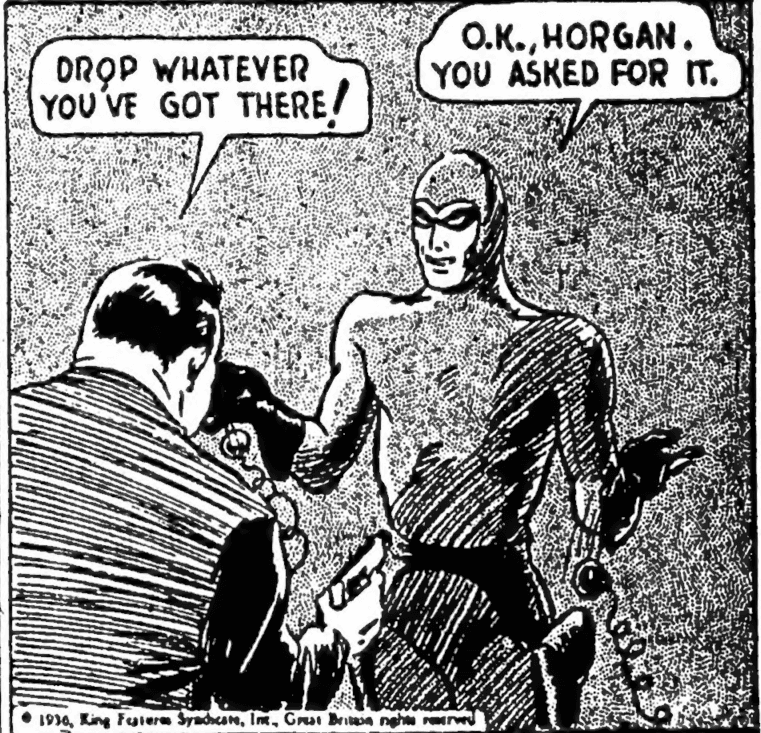
The format took a few years to settle. The first ten issues gave only 16 pages to The Phantom, padding the rest with general knowledge features, and many stories were edited down to fit. From issue 29 the title standardised on the conventional 32-page comic, and from issue 35, dated 1 January 1967, it moved to a fortnightly schedule, releasing on the 1st and 15th of each month. In November 1981 it accelerated again to a weekly.
India also changed The Phantom. Editors renamed Bengali as Denkali to avoid confusing Indian readers, and the Singh Brotherhood pirates became the Singa pirates. The reprints were heavily censored too, with innocuous panels of the Phantom kissing Diana Palmer removed. Even the costume shifted, coloured blue for the first ten issues before settling into the traditional purple once full colour arrived from issue 8.
The covers became collectables in their own right. B. Govind painted the artwork for roughly the first fifty issues, with the back cover carrying a pin-up poster. Indian Phantom fans still rank Govind's painted covers alongside George Wilson's celebrated Gold Key covers in the United States, and a few early issues even dared to show the Phantom's eyes.
The Phantom never had the title to himself for long. From issue 46 in July 1967 Mandrake the Magician made the first of many appearances, and the line rotated through King Features characters including Flash Gordon, Rip Kirby, Phil Corrigan, Buz Sawyer and Garth. Around the main story sat back-up strips such as Henry and Timpa, Ripley's Believe It or Not snippets, and advertisements for classic Indian brands like Parle and Gold Spot.
Indrajal was also a multilingual project. English, Hindi and Marathi editions ran from the very first issue, Gujarati and Tamil followed in January 1965, and a Bengali edition arrived in January 1966, with versions also registered in Malayalam and Kannada. In December 1976 the line added something new, an original Indian hero named Bahadur, created by Aabid Surti.
The end came in the line's 27th year. A total of 803 issues were published, two planned numbers having been lost to industrial strike action, and more than half of them carried Phantom stories. The final issue, number 805, appeared on 16 April 1990, closing a run that had quietly taught a generation of Indian readers how to love comics.
Compiled from published archives and public records.