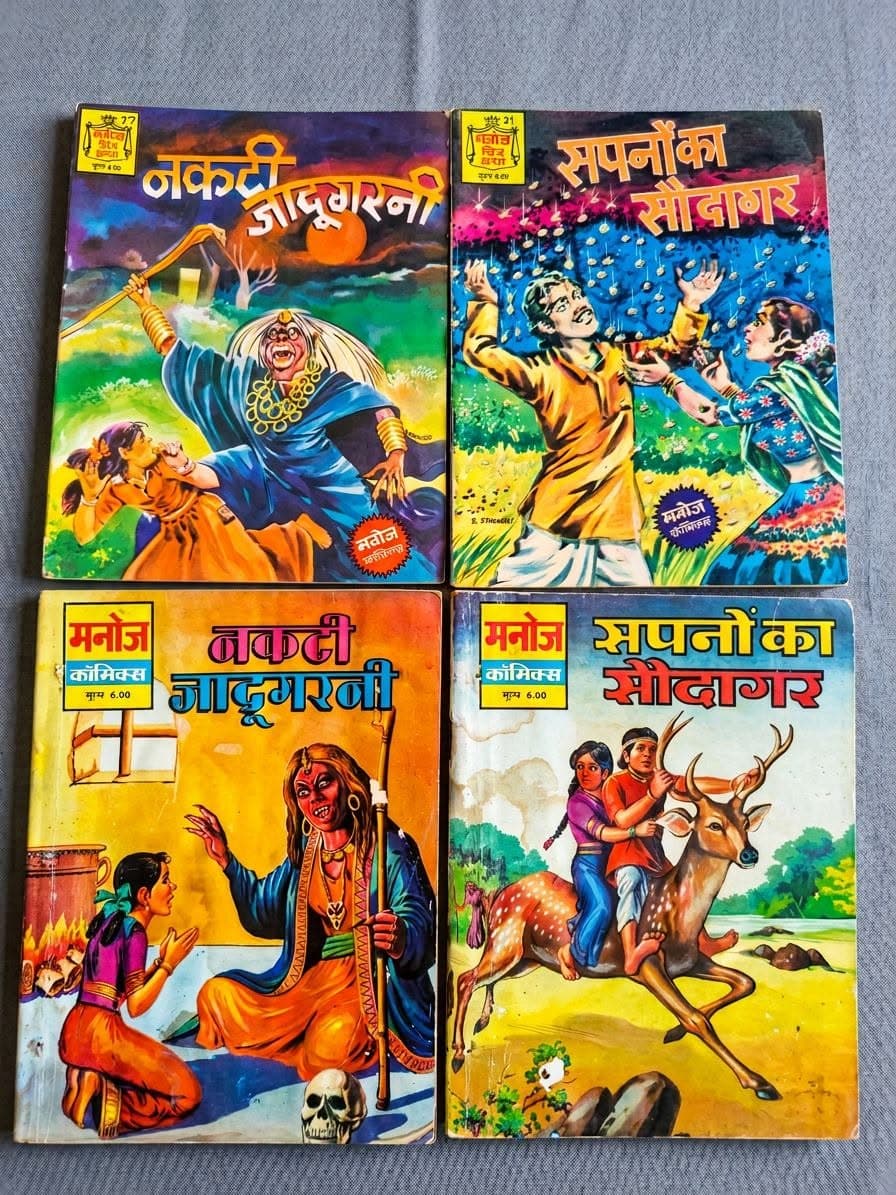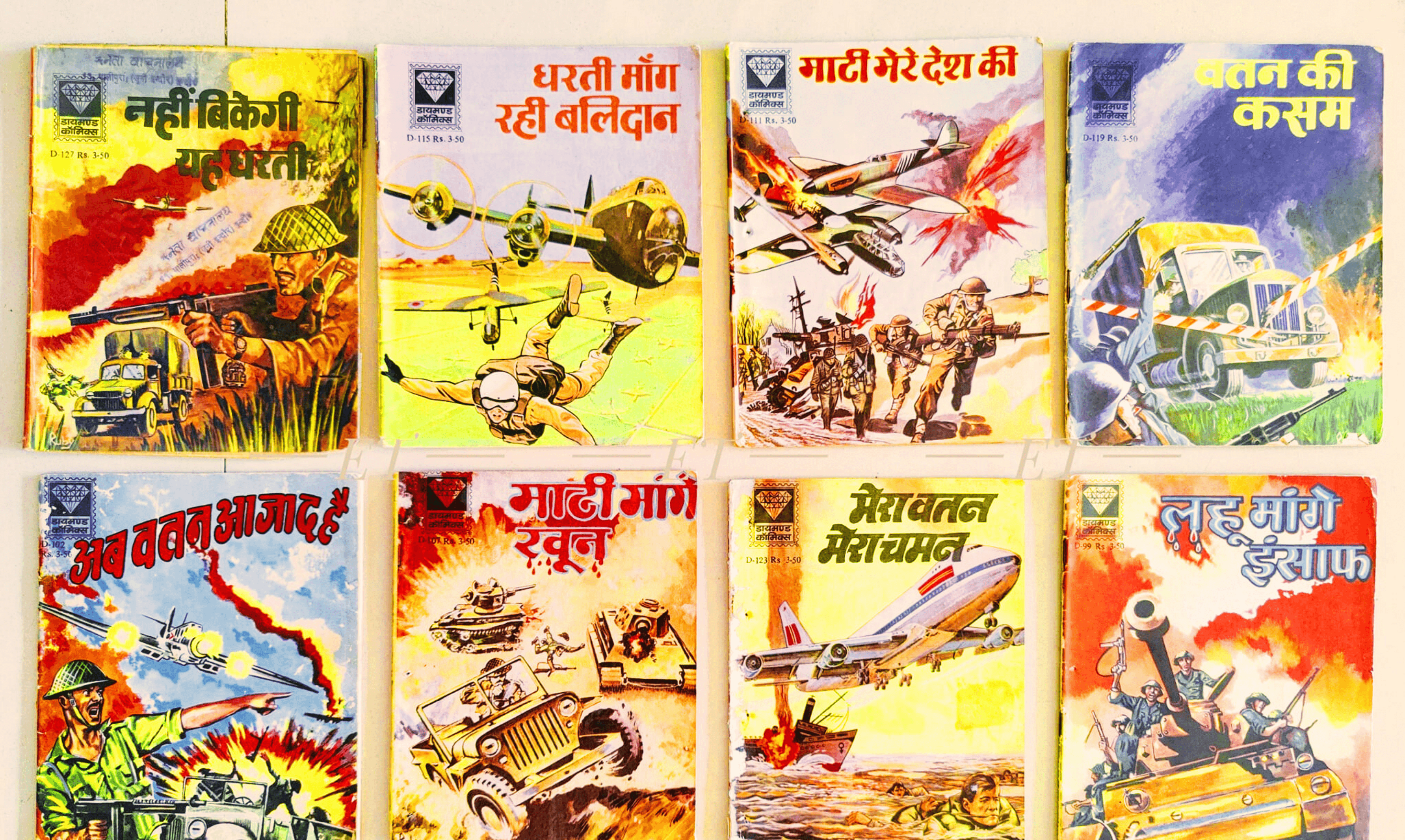
Walk into any Indian household today, and tucked away in an old cupboard or cardboard box you might still find a stack of comic books with faded covers and yellowing pages. For one generation, these were treasured possessions passed between friends, rented from neighbourhood libraries, or bought from railway station bookstalls with carefully saved pocket money. They introduced readers to mythological heroes, witty commoners, masked vigilantes, fearless detectives and fantastical worlds long before smartphones, streaming services and social media transformed childhood.
The history of Indian comics is therefore much more than a nostalgic journey. It is a story of how a newly independent nation experimented with visual storytelling, built its own publishing industry, adapted global influences into local narratives, endured periods of decline and is today witnessing a gradual revival through independent creators and digital platforms.
Although comic books became popular only in the second half of the twentieth century, India's relationship with sequential storytelling stretches back centuries. Temple sculptures, illustrated manuscripts, Patachitra scrolls of Bengal, Cheriyal scrolls of Telangana and Phad paintings of Rajasthan all narrated stories through a sequence of images accompanied by oral narration. While these traditions were not comics in the modern sense, they established a visual language that combined art and storytelling in uniquely Indian ways.
They were the first books that transformed words into worlds
The foundations of the modern Indian comics industry emerged during the 1960s. The arrival of imported newspaper strips and comic books introduced readers to characters such as The Phantom, Mandrake the Magician, Flash Gordon and other internationally popular heroes. Publishers like Indrajal Comics familiarised Indian audiences with the grammar of comic storytelling, panels, speech balloons, serialized adventures and dynamic visual narratives. These imported titles demonstrated that comics could appeal to readers of all ages, but they also highlighted the absence of stories rooted in India's own history and culture.
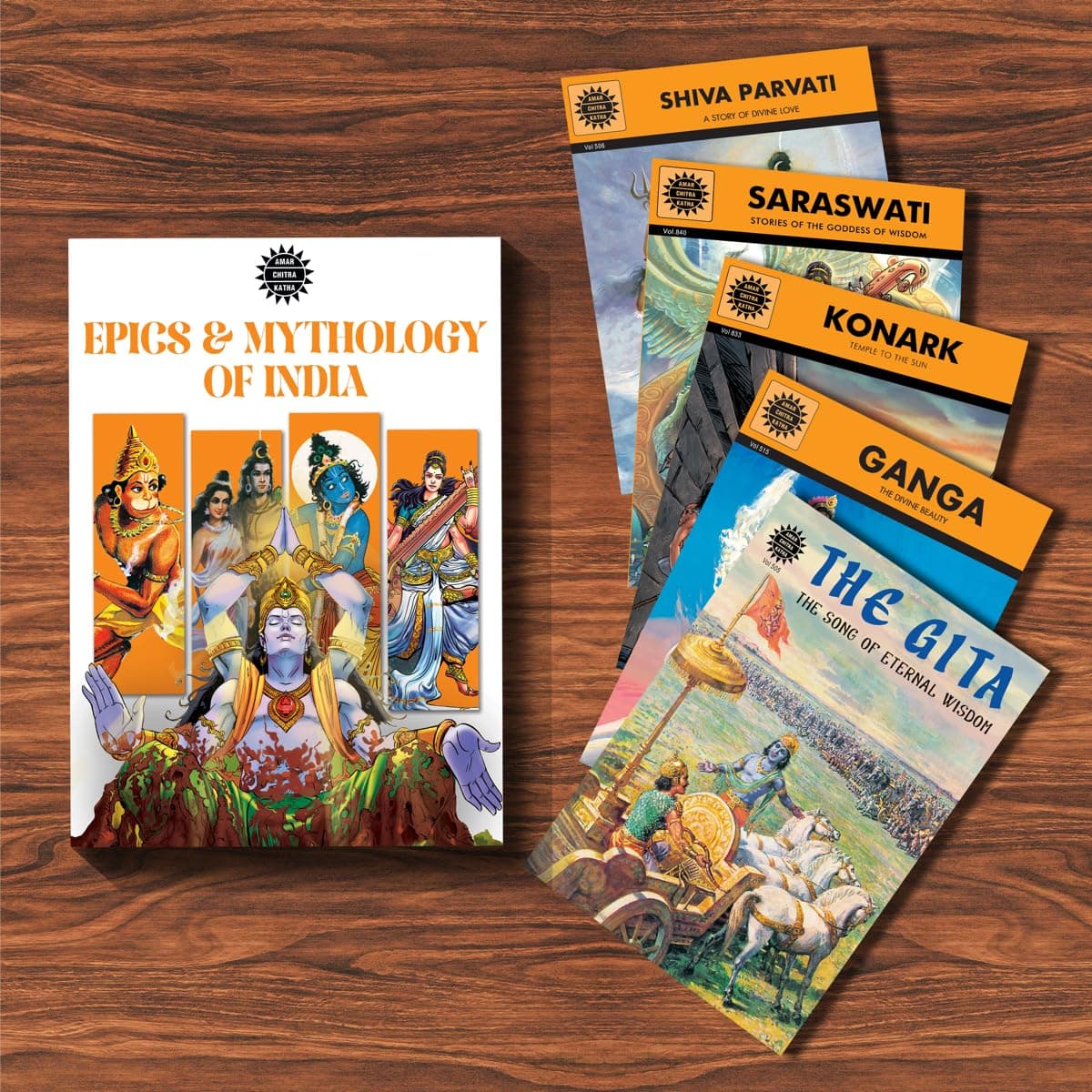
That gap was filled by Amar Chitra Katha, founded by educator Anant Pai in 1967. Inspired by the realization that many Indian children knew more about Greek mythology than the Ramayana or the Mahabharata, Pai envisioned comics that would make Indian history, mythology and folklore accessible to younger readers. The series transformed educational publishing by presenting kings, saints, freedom fighters, philosophers and legends through engaging visual narratives. Published in multiple Indian languages and distributed across schools and bookstores, Amar Chitra Katha became one of the country's most influential publishing successes and introduced generations of readers to India's cultural heritage.
If Amar Chitra Katha established comics as an educational medium, the following decades proved they could also become a thriving entertainment industry. The late 1970s and 1980s marked the golden age of Indian comics. Publishers such as Diamond Comics, Raj Comics, Tulsi Comics, Manoj Comics and Fort Comics expanded rapidly, producing everything from mythology and humour to horror, science fiction and superhero adventures. Comics became affordable mass-market entertainment available at magazine stalls, railway stations and neighbourhood bookshops across the country.
This period also witnessed the birth of distinctly Indian superheroes. Raj Comics introduced characters such as Nagraj, Super Commando Dhruva, Doga, Bhokal, Parmanu and Tiranga, each reflecting different aspects of Indian society and popular culture. Unlike their American counterparts, these heroes often operated within recognisably Indian cities, confronted local crime syndicates, drew upon mythology or indigenous science fiction, and spoke directly to the aspirations of Indian readers. Their popularity demonstrated that Indian audiences were eager for heroes who belonged to their own cultural landscape.
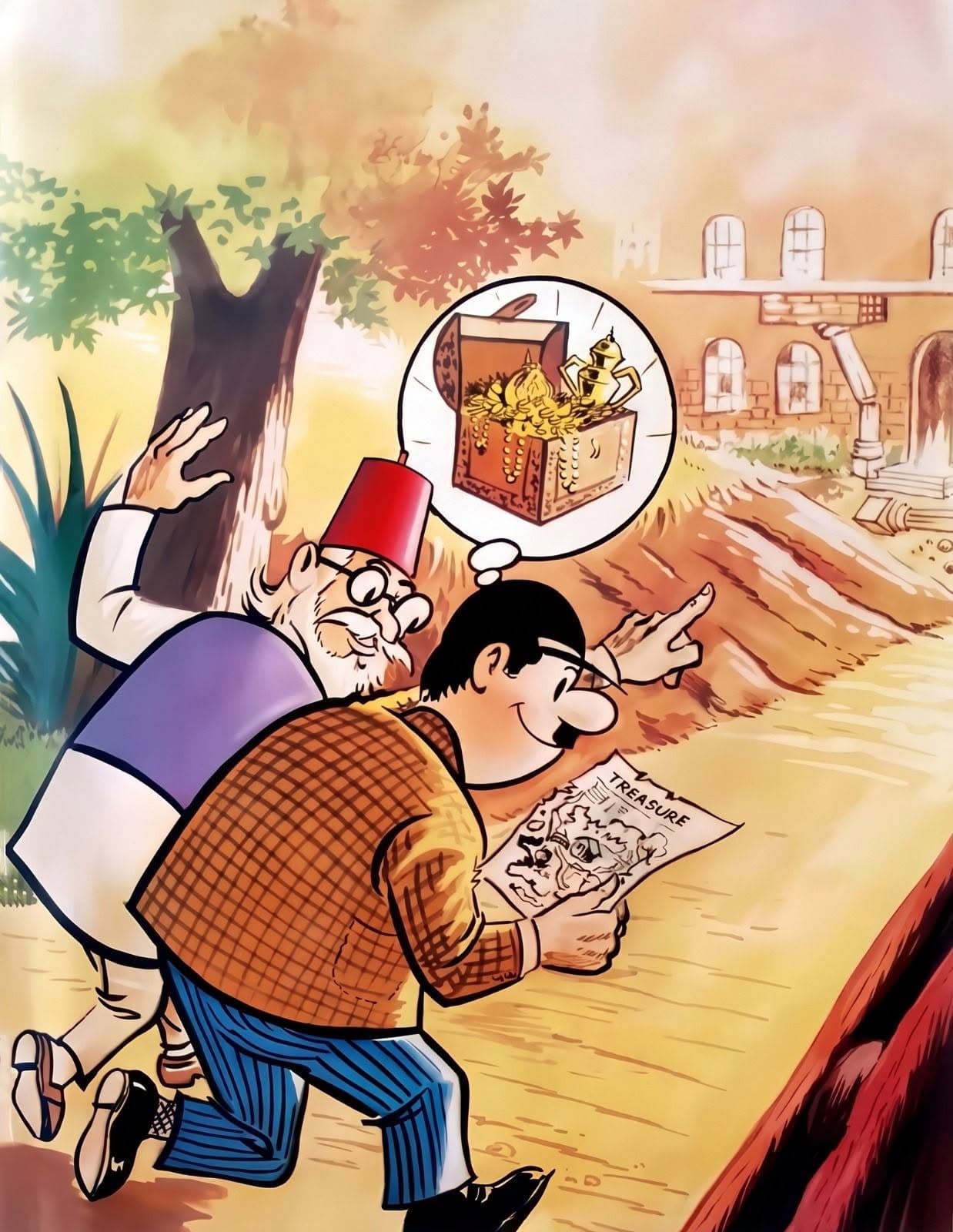
Equally significant were comics aimed at younger readers. Diamond Comics popularised beloved characters such as Chacha Chaudhary, Billoo, Pinki and Raman, whose humorous adventures captured the everyday experiences of middle-class India. These comics relied less on spectacular action and more on wit, satire and relatable situations, making them enduring favourites across generations.
The success of Indian comics was supported by a unique ecosystem. Before the rise of shopping malls and online retail, comics reached readers through railway station stalls, newspaper vendors, school book fairs and circulating libraries where a comic could be rented for a small fee. Children exchanged issues with friends, collected annual editions and eagerly awaited the next installment of serialized adventures. Comics became an integral part of urban and small-town childhood alike.
Yet this flourishing industry faced unprecedented challenges during the 1990s. Economic liberalization, the arrival of cable television, expanding video game culture and later the internet fundamentally altered children's entertainment habits. At the same time, rising printing costs, shrinking distribution networks and widespread piracy placed additional pressure on publishers. Many comic houses reduced production, ceased operations or shifted toward reprints, while readership steadily declined.
The digital era, however, has not marked the end of Indian comics. Instead, it has encouraged their reinvention. Independent creators increasingly publish webcomics, graphic novels and crowdfunded projects that explore contemporary themes ranging from politics and gender to science fiction and personal memoir. Comic conventions, online marketplaces and social media have enabled artists to reach audiences directly without relying solely on traditional publishers. At the same time, established publishers continue to preserve and revive classic characters through collected editions, digital platforms and collaborations with animation and gaming studios.
Today's Indian comics industry is considerably smaller than its peak during the 1980s, yet it is arguably more diverse than ever before. Alongside familiar superheroes exist literary graphic novels, regional-language comics, educational publications, manga-inspired works and experimental visual narratives that challenge conventional definitions of the medium. Indian creators are increasingly participating in global conversations while drawing upon local histories, folklore and contemporary realities.
The journey of Indian comics mirrors the story of modern India itself. They have reflected changing ideas of nationhood, celebrated cultural heritage, responded to technological transformations and continually adapted to shifting reader expectations. Whether recounting the adventures of mythological heroes, chronicling the exploits of masked vigilantes or documenting everyday life with humour and empathy, Indian comics have remained a uniquely accessible form of storytelling.
As the medium enters its seventh decade, its future may no longer depend solely on newsstands or printed pages. Digital publishing, animation, streaming adaptations and independent creators are opening new possibilities for visual storytelling. Yet the enduring appeal of Indian comics lies not in the format through which they are consumed, but in their ability to capture the imagination. For millions of readers, they were the first books that transformed words into worlds, proving that within a sequence of carefully drawn panels, entire universes could exist.
The history of Indian comics is therefore not merely the history of a publishing industry. It is the history of generations who learned to dream, imagine and understand their world, one panel at a time.