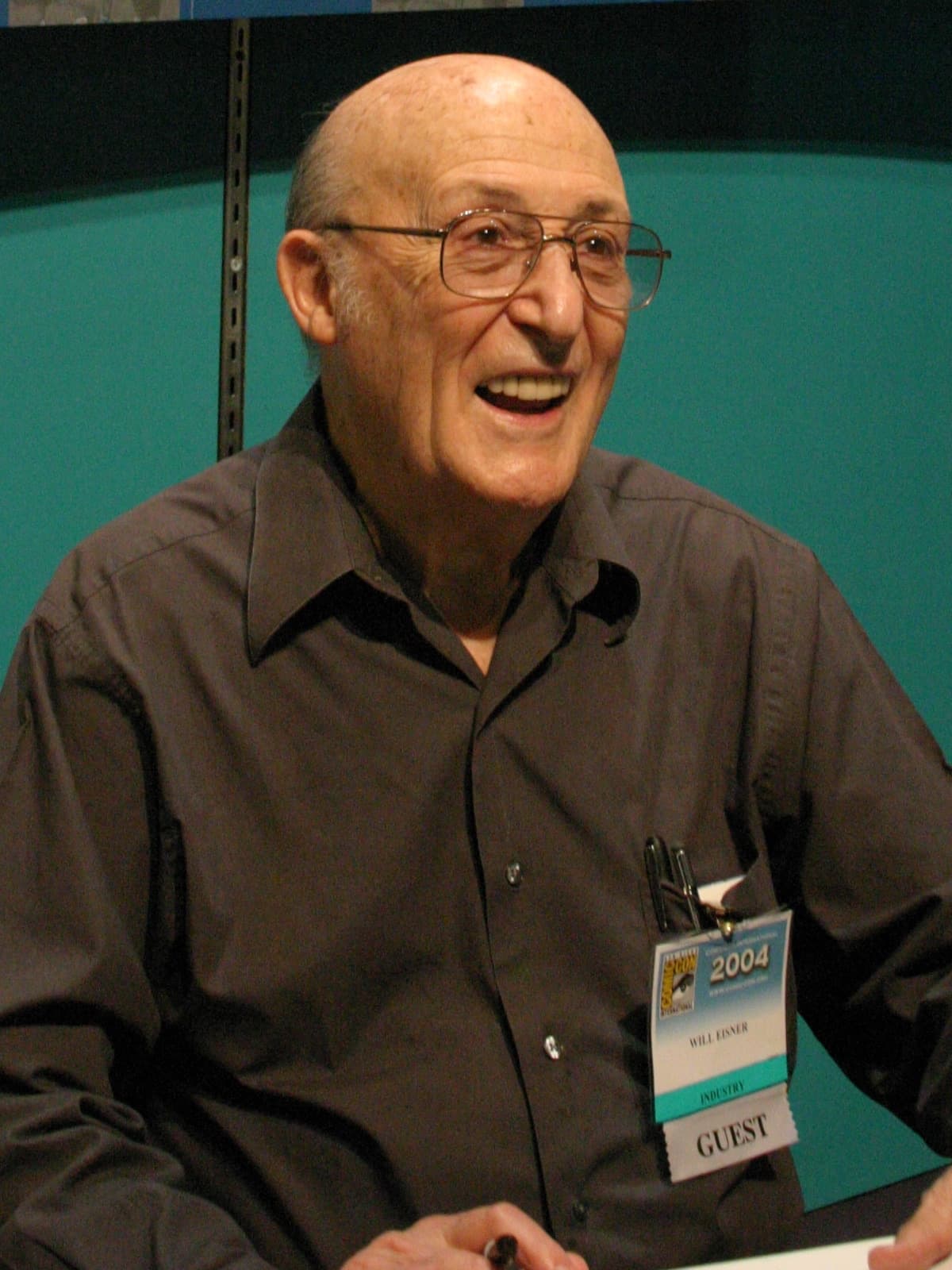
William Erwin Eisner was born in New York City on 6 March 1917 and died on 3 January 2005. Across nearly seven decades he moved comics from disposable newsprint toward a recognized literary form.
Eisner was born in Brooklyn to Jewish immigrant parents, his father from Kolomyia in then Austria-Hungary and his mother of Romanian Jewish descent. The family grew up poor and moved frequently. He attended DeWitt Clinton High School, drew for its publications, and afterward studied for a year at the Art Students League of New York. Early contacts there led to commercial cartooning work.
In 1936, his high-school friend and future Batman creator Bob Kane suggested the 19-year-old try selling work to the new comic book Wow, What A Magazine, whose editor Jerry Iger bought an Eisner adventure strip. After Wow folded, Eisner and Iger formed one of the first comic-book packaging studios, supplying material to publishers such as Fox, Fiction House and Quality Comics, where Eisner co-created characters including Doll Man and Blackhawk.
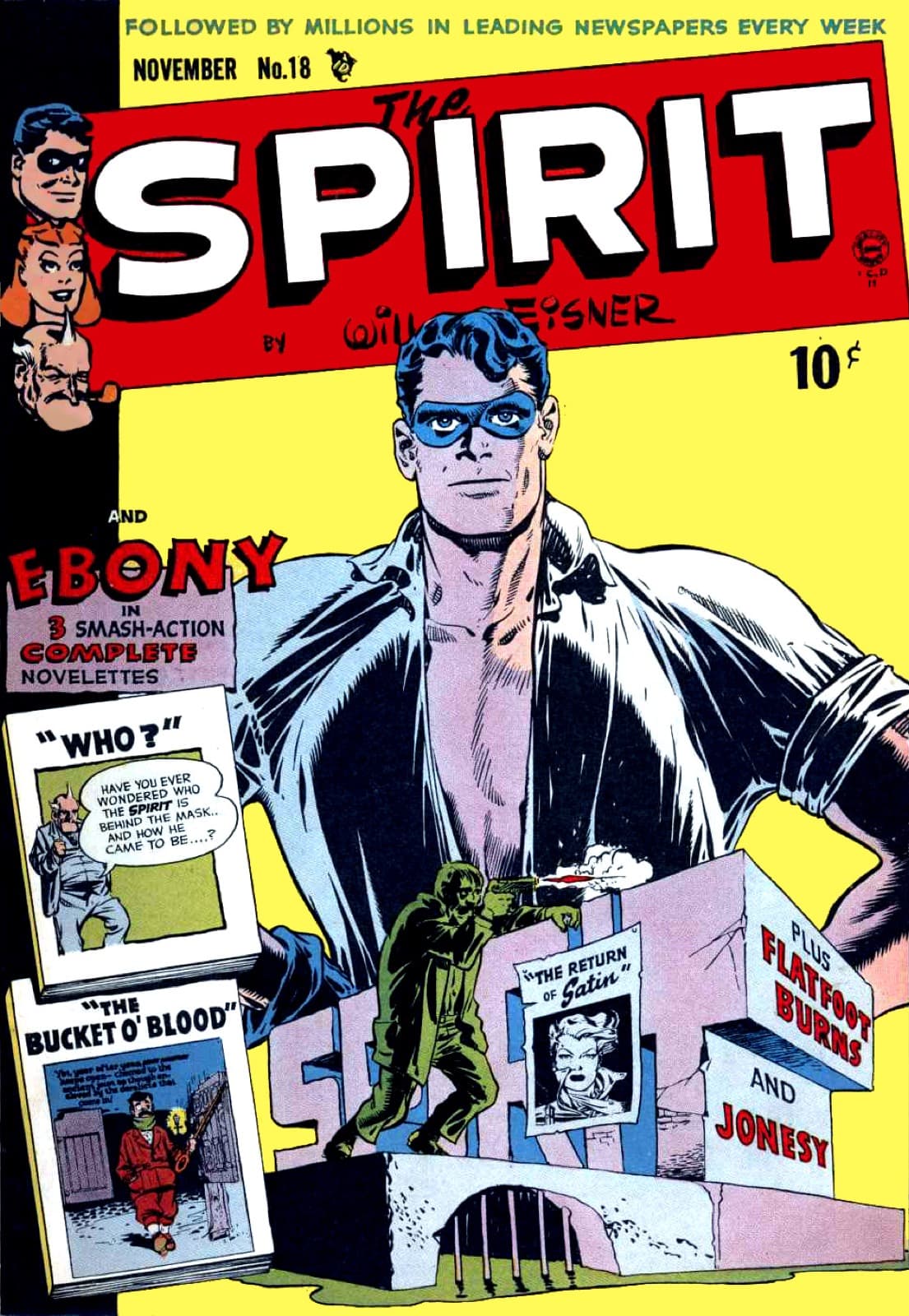
In late 1939 he left the profitable partnership to create a Sunday newspaper comic-book insert. The result, The Spirit, premiered on 2 June 1940 and ran through 1952. The masked urban crimefighter anchored a 16-page supplement eventually carried by around 20 newspapers with a combined circulation reported as high as five million copies, and the series became celebrated for its formal experiments.
Eisner was drafted into the US Army in 1942 and returned to civilian life in 1945, allowing trusted assistants, among them future cartoonist Jules Feiffer, to continue the feature in his absence. During his service he pioneered instructional comics. In 1948 he founded the American Visuals Corporation to produce instructional material, and from 1951 he produced PS, The Preventive Maintenance Monthly for the Army for years.
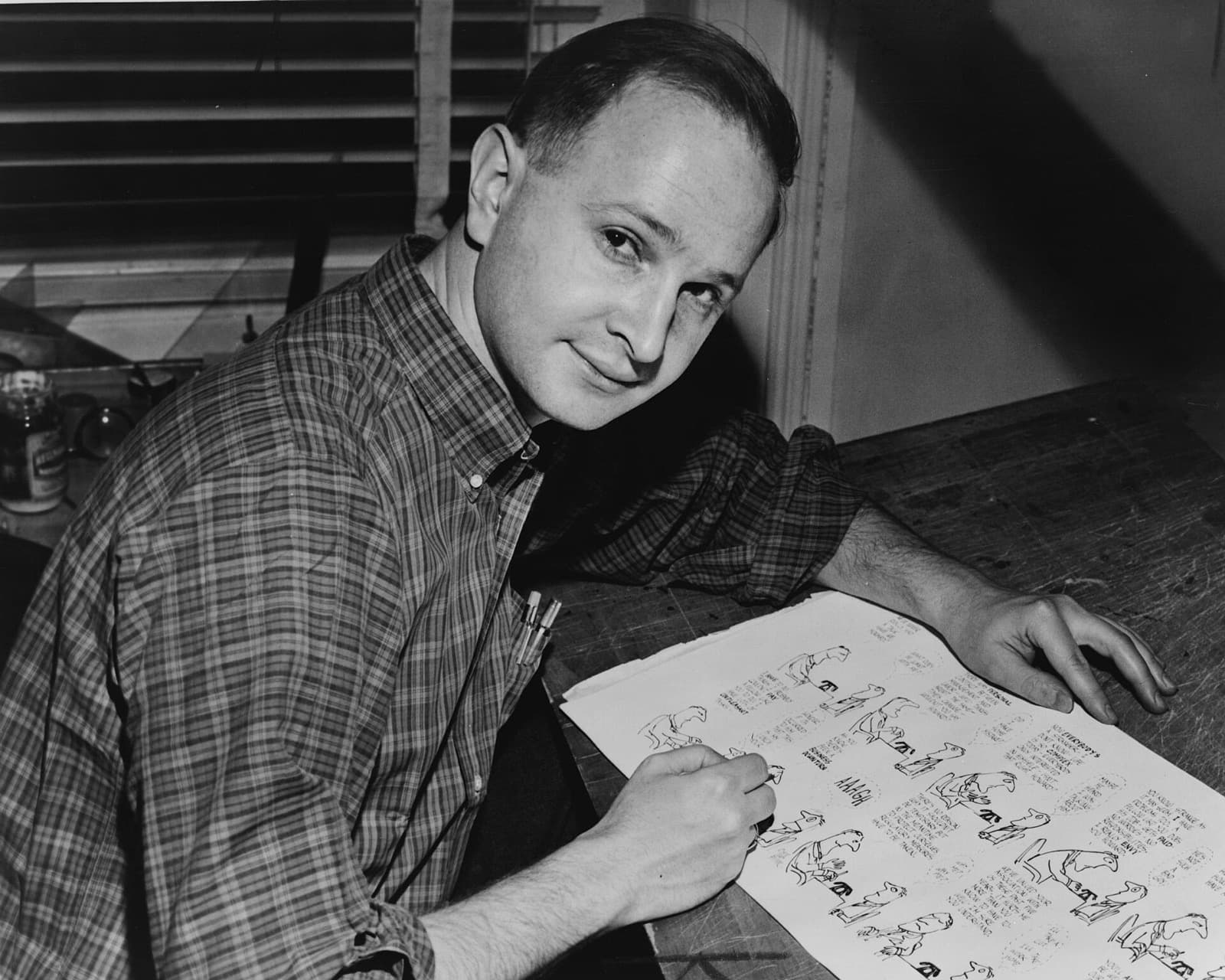
In the late 1970s Eisner turned to longer storytelling. A Contract with God and Other Tenement Stories, published by Baronet Books in October 1978, is an early example of the American graphic novel and the work with which he popularized the term. He followed it with further books chronicling New York immigrant communities, including A Life Force and Dropsie Avenue, working at a rate of nearly one a year into his eighties.
He also helped found formal comics studies, publishing Comics and Sequential Art in 1985. His later output included sequential-art retellings of literary and mythic material, among them Moby-Dick and Sundiata, the latter published in 2002 when he was 85. He continued producing new work almost to the end of his life.
Eisner died in Lauderdale Lakes, Florida, of complications from heart surgery. The Will Eisner Comic Industry Awards, named in his honor, are widely regarded as the comics field's equivalent of the Academy Awards; the first were conferred in 1988, and the ceremony has been held at San Diego Comic-Con every year since 1991.
Compiled from public records.