The Kyoto International Manga Museum opened on 25 November 2006 as a joint project of the City of Kyoto and Kyoto Seika University. It functions at once as a museum, a research center and an open library inside the preserved building of the former Tatsuike Elementary School.
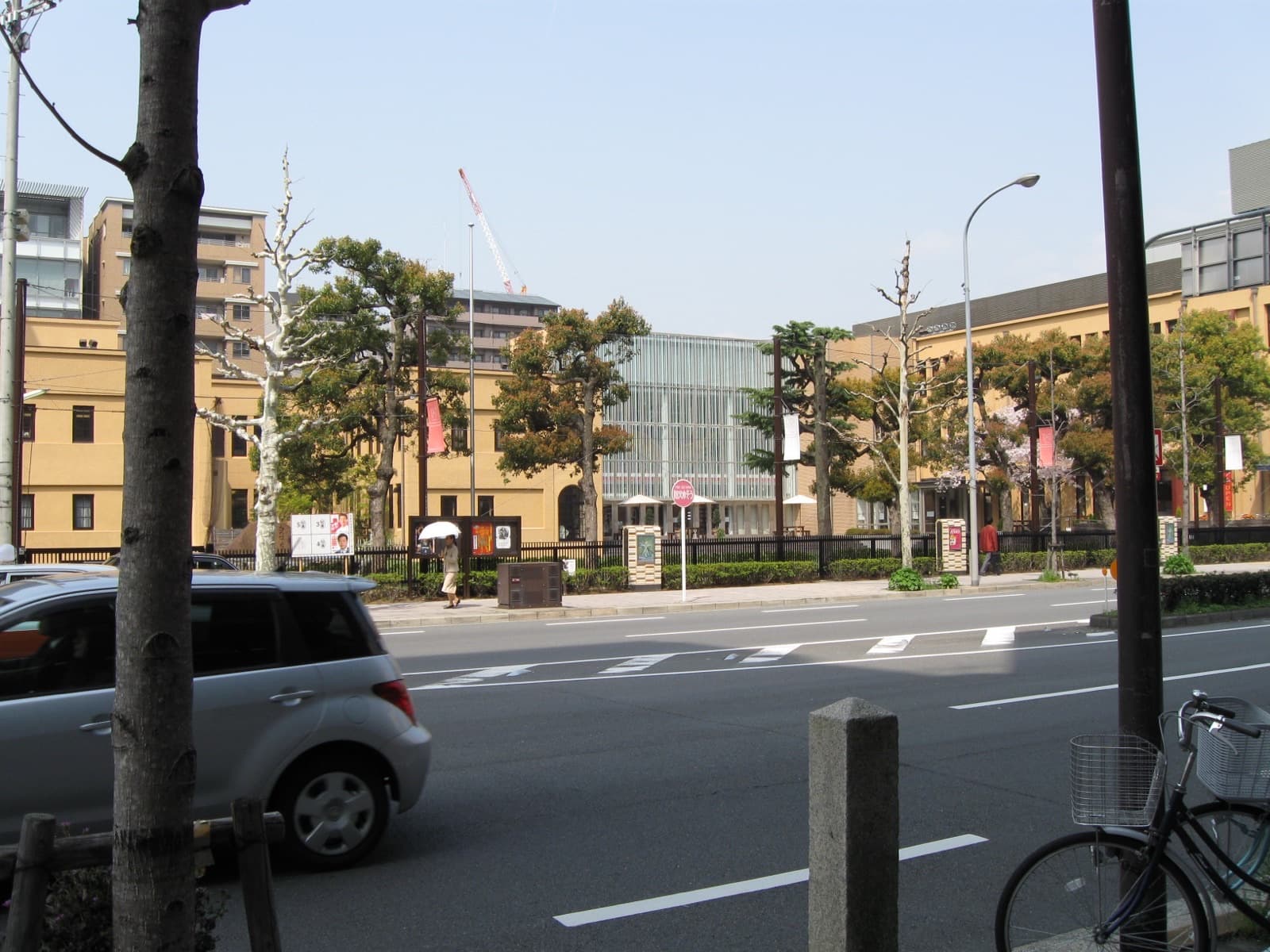
The museum sits in Nakagyo-ku, a short walk from Karasuma Oike subway station, and occupies the buildings of the former Tatsuike Elementary School. The site has deep roots in the city's history: the original school was founded in 1869 as one of the district-based elementary schools that Kyoto residents established with their own funds, predating Japan's modern national education system. When the school closed and merged with others in 1995, the structures were preserved rather than razed.
Three of those structures anchor the museum today: a main building dating to 1929, a north building from 1937, and an auditorium completed in 1928. The renovation left much of the early Showa-era character intact, from tiled staircases to creaking wooden corridors. Visitors notice the schoolhouse atmosphere immediately, which is part of the appeal.
The institution traces its founding to a proposal from Kyoto Seika University in 2003, with the city announcing the plan in 2004. Under the partnership, Kyoto provides the land and buildings while the university operates the facility. That arrangement makes the museum both a public cultural asset and an academic resource tied to the university's manga research work.
Its signature feature is the Wall of Manga, a continuous run of shelving holding roughly 50,000 publications dating from the 1970s onward, most of them donated. These volumes are arranged across floors by readership, with shonen, shojo and seinen titles each given their own level, and visitors are free to take them down and read.
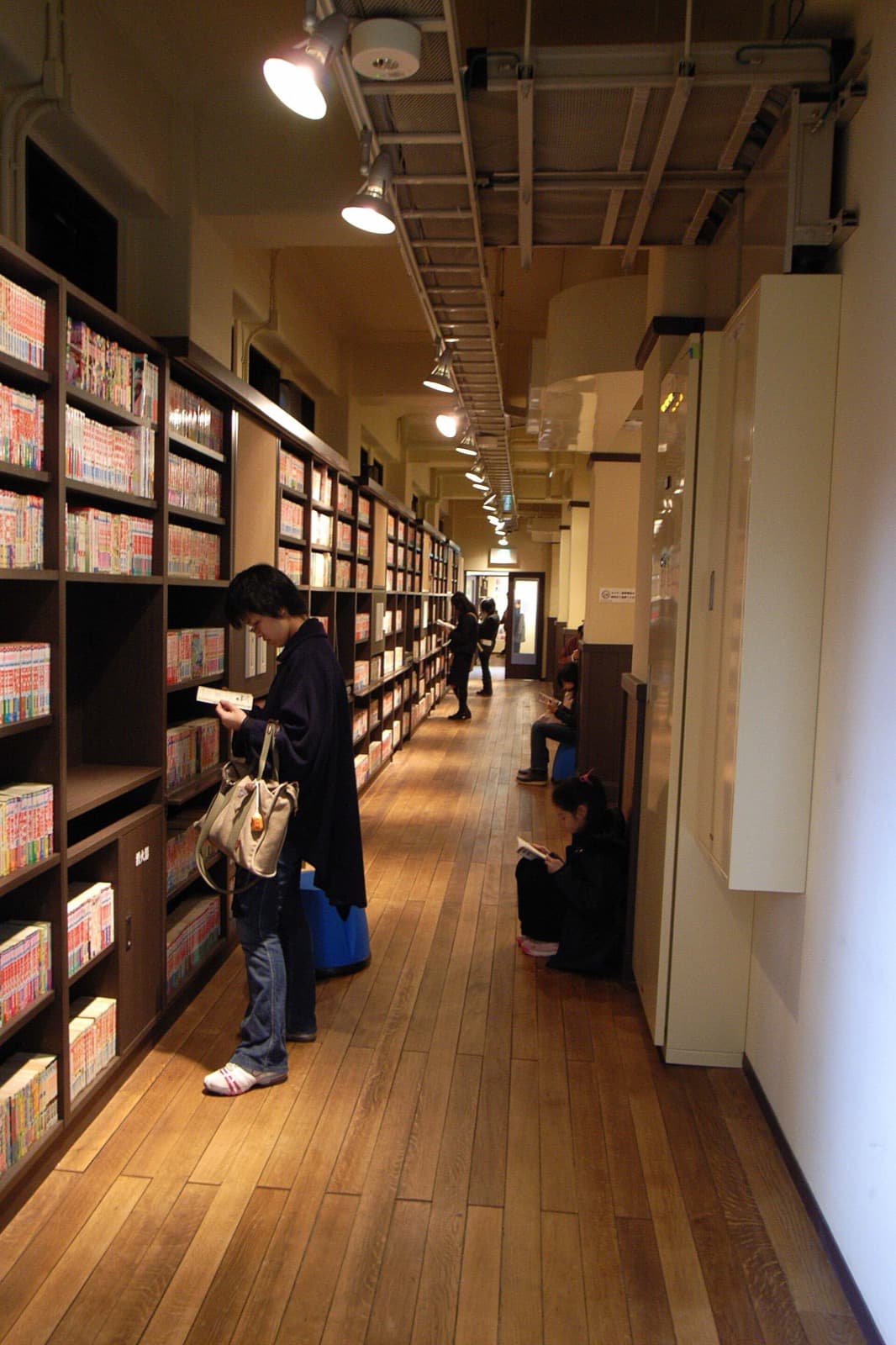
The full collection is far larger, totaling around 300,000 items. Beyond the openly accessible 50,000 volumes sits a closed-stack archive of roughly 250,000 items that researchers can consult, spanning Edo-period woodblock caricature, pre-war magazines, post-war rental books, and modern series from Japan and abroad. A children's library adds a few thousand picture books.
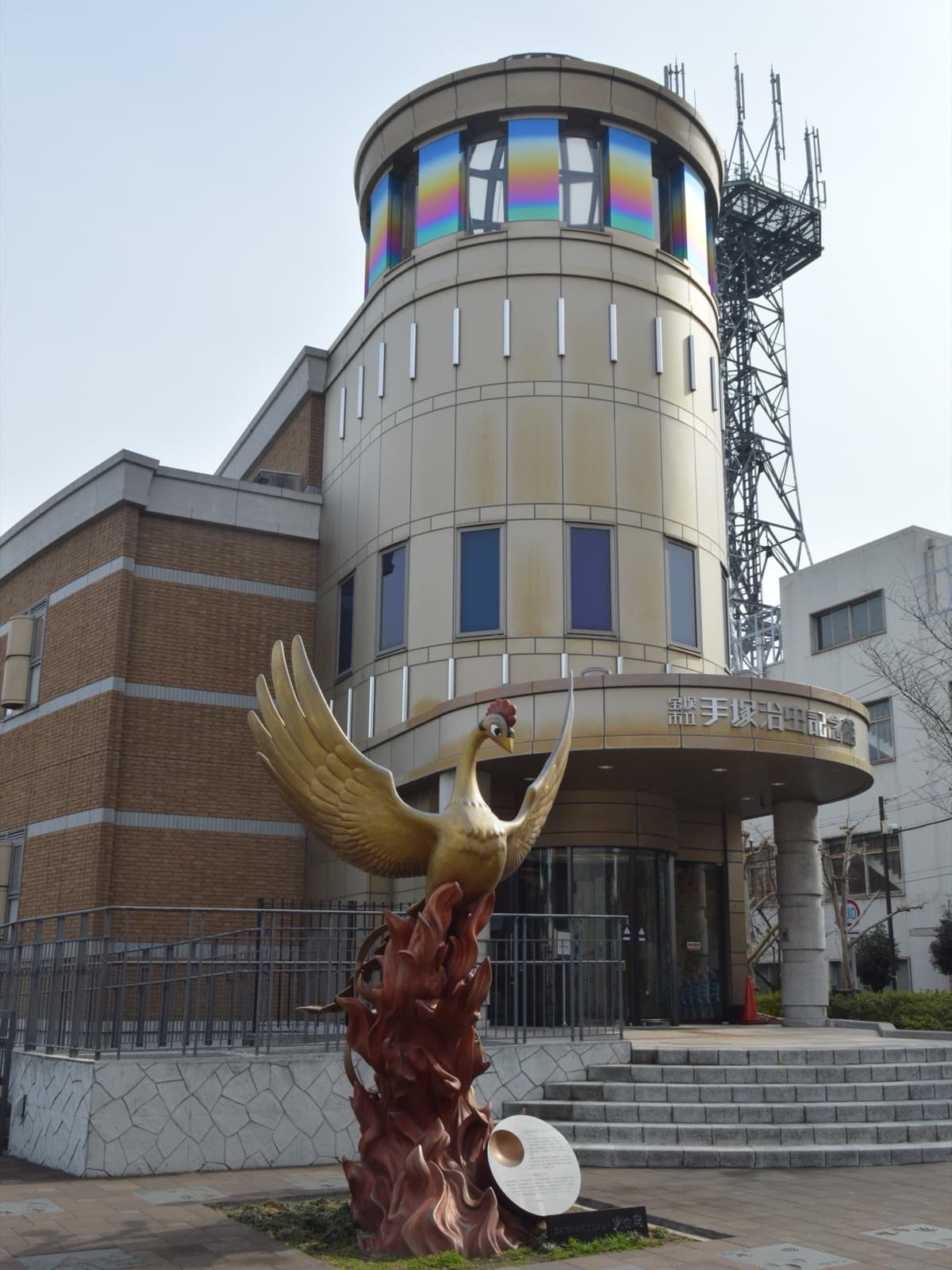
Among the museum's exhibits is a room of plaster casts taken from the hands of manga and anime artists who have visited, a permanent display that turns the creators themselves into part of the collection. Other features include a hanging sculpture of Osamu Tezuka's Phoenix, a permanent display tracing influential manga, a kamishibai storytelling room with regular performances, and a studio where visitors can watch artists at work.
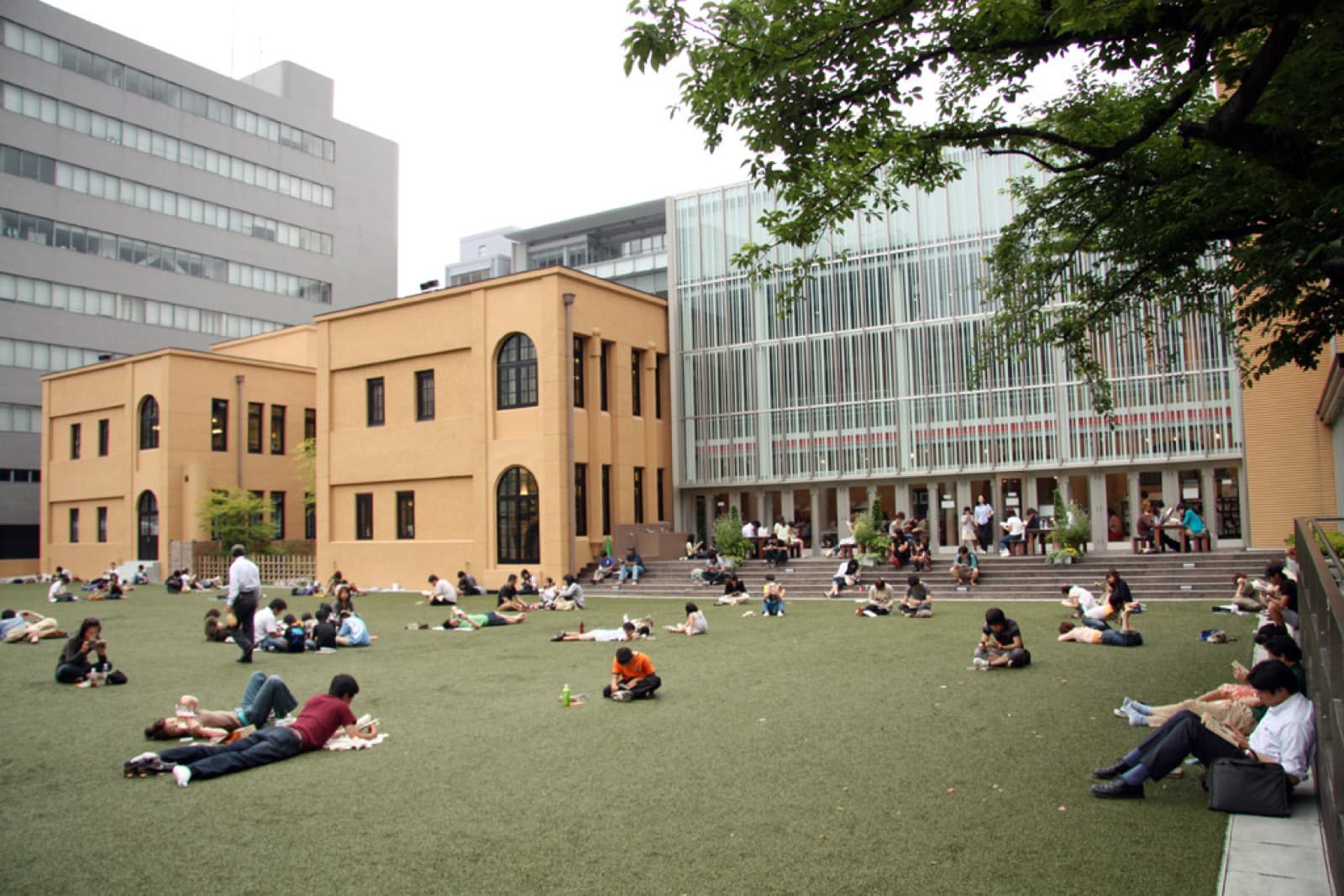
On warm days the museum is perhaps best known for a simpler scene: readers stretched out on the grassy front yard with stacks of borrowed comics, treating the grounds as an open-air reading room. The museum also serves a scholarly function, supporting manga research and hosting the office of an academic society devoted to the study of cartoons and comics.
Compiled from public records.